

Key Takeaways
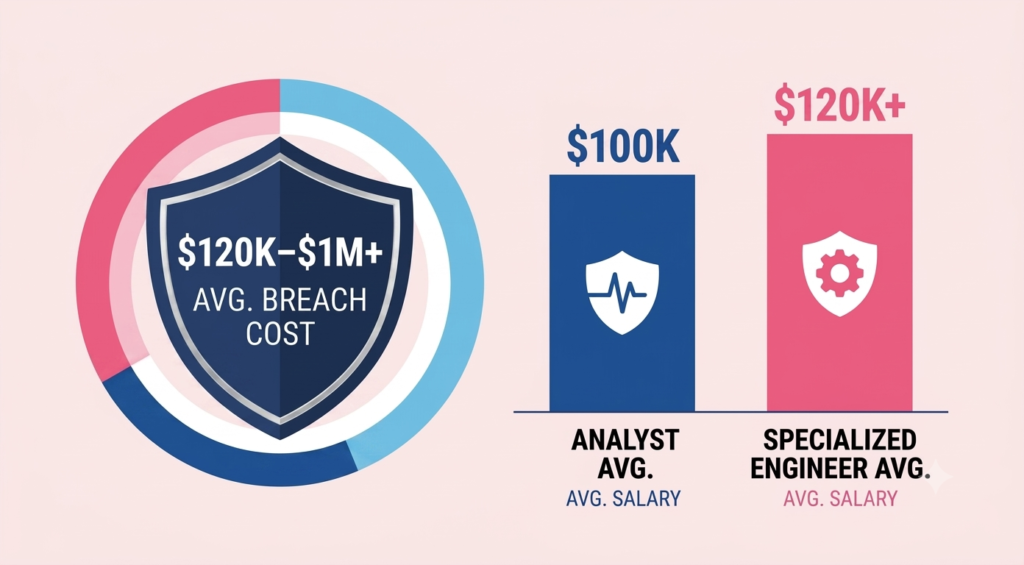
- A single data breach can cost a small business anywhere from $120,000 to over $1 million – far more than any security subscription.
- All-in-one security platforms almost always win on total cost of ownership for businesses under 100 employees, thanks to lower training, integration, and management expenses.
- The cybersecurity skills shortage is a real problem for small businesses, and separate “best-of-breed” tools make it significantly worse.
- Unified platforms detect and contain threats faster, but they do carry a vendor concentration risk worth planning around – more on that below.
- TechEd Shield helps non-technical business owners cut through the noise and build a security setup that actually fits their size and budget.
Picking a small business cybersecurity setup sounds like it should be simple. But the choice between an all-in-one platform and a collection of separate specialist tools is one of the most consequential decisions a small business owner can make – and it has real dollar figures attached to it. This guide breaks down exactly what each approach costs, what it costs to run, and which one actually keeps your business safer.
A Breach Can Cost Small Businesses $38K to Over $1 Million
Before comparing price tags on security tools, it helps to understand what’s actually at stake. A single data breach can cost a small business anywhere from $120,000 to over $1 million, once you factor in downtime, legal fees, lost customers, and reputational damage. That’s not a worst-case outlier – it’s a realistic middle-of-the-road estimate from industry economic data.
Small businesses typically spend between $5,000 and $50,000 per year on cybersecurity. Security experts generally recommend putting 7-12% of your annual IT budget toward protection. That range sounds wide, but the right number depends heavily on which approach you choose – and how much hidden overhead comes with it. Resources like TechEd Shield are built specifically to help non-technical business owners make sense of these decisions without needing an IT department to translate.
The math is straightforward: even a modest breach at the low end of that range would wipe out years’ worth of security spending. The question isn’t whether to invest in protection – it’s which setup gives you the most coverage per dollar, without creating more complexity than your team can handle.
What You’re Actually Paying For
Security costs go well beyond the monthly subscription line in your budget. Total Cost of Ownership – the actual lifetime cost of a security setup – includes licensing, deployment, training, maintenance, and the hours spent managing everything. That last category is where most small businesses get surprised.
The Real Price of an All-in-One Platform
Consolidated platforms bundle multiple protections into a single subscription. Microsoft 365 Business Premium, for example, packages endpoint protection, mobile device management, identity controls, and advanced email threat filtering for $22.00 per user per month – roughly $264 per user annually. CrowdStrike Falcon Go covers next-generation antivirus and device protection at $59.99 per device per year. SentinelOne Singularity Complete lands at $179.99 per endpoint annually.
These aren’t cheap sticker prices, but they include something the separate-tool approach doesn’t: everything works together out of the box. Microsoft Defender deploys through an agent built directly into Windows. CrowdStrike runs a single cloud-native agent across multiple security modules. No custom connectors. No integration projects. No waiting.
The Hidden Costs of Separate Tools
A best-of-breed stack looks affordable line by line. Specialized email security tools like Avanan start from around $4.00 to $6.00 per user per month, depending on the protection tier – roughly $48 to $72 per user annually. Proofpoint Essentials Advanced typically costs $45 to $65 per user per year. A Fortinet FortiGate 40F hardware firewall carries a one-time hardware cost of around $510, plus an annual Unified Threat Protection subscription (verify current pricing with an authorized reseller before publishing – typically 30-60% of hardware cost).
Add those up across three or four tools and the licensing cost already rivals an all-in-one platform. But the real damage comes from what’s not on the invoice:
- Custom integration work – separate tools rarely communicate by default. Building and maintaining the connectors between them requires paid developer time or third-party middleware.
- Training costs – each new platform has its own interface, configuration logic, and update cycle. Every tool your team adds is another system someone has to learn.
- Productivity loss – switching between separate admin consoles during an incident slows response times and creates blind spots.
- SIEM overhead – to get a unified view of your security data across separate tools, you typically need a Security Information and Event Management system, which adds its own licensing and storage costs on top.
When integration expenses, training time, and productivity losses from constant context-switching are factored in, the true cost of a fragmented stack regularly exceeds that of a consolidated platform.
The Skills Gap Makes Separate Tools Harder to Manage
ISC2 Cybersecurity Workforce Study reported a global cybersecurity workforce gap of 4.8 million people – the largest shortfall on record. Small businesses feel this more than anyone – SMBs consistently rank the lack of in-house security expertise as one of their top two cybersecurity risks.
A best-of-breed stack makes this worse. Running a multi-vendor environment means your team needs to master different configuration languages, manage separate access controls, and stay current on distinct platform behaviors across every tool in the stack. If the one person who understands your firewall leaves, you’re exposed.
A qualified cybersecurity analyst commands an average salary of $100,000 annually. A security engineer averages $120,000 or more. Outsourced IT support in North America typically runs $100-$250 per employee per month. For most small businesses, those numbers are simply out of reach.
All-in-one platforms are specifically designed to close this gap. Because everything runs through a single dashboard with one interface to learn, existing IT generalists – or even a capable office manager – can handle day-to-day security tasks. Major platforms are also embedding AI assistants (like Microsoft Copilot for Security and CrowdStrike Charlotte AI) that translate raw security alerts into plain language and walk users through response steps. That’s a meaningful capability for a team without dedicated security staff.
Which Approach Actually Catches More Threats?
Cost and complexity matter, but the real test of any security setup is whether it stops attacks.
How Unified Platforms Detect Attacks Faster
Modern attacks rarely use just one method. A typical campaign might start with a phishing email, use stolen login credentials to access cloud systems, then quietly install malicious software on endpoints. Catching that kind of multi-step attack requires connecting the dots across email, identity, and device activity – in real time.
Unified platforms do this natively because all their tools share the same data foundation. When an endpoint alert, an unusual login, and a suspicious email all flow into one engine, the system can automatically spot the pattern and respond before damage spreads.
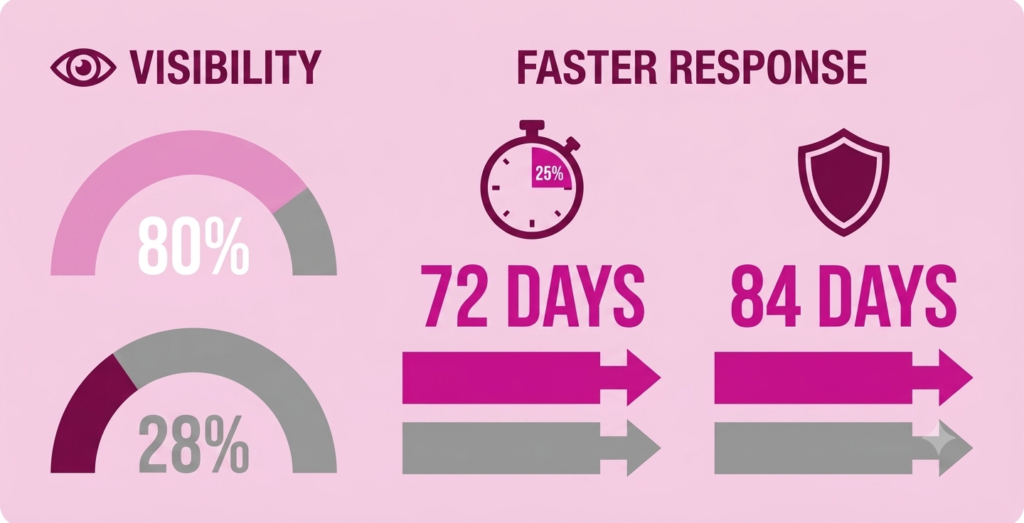
An IBM study on security platformization found that organizations using a unified platform approach detected incidents 72 days faster and contained active threats 84 days faster compared to those running fragmented tools. The return on security investment for platformized organizations averaged 116%, versus just 32% for those running disconnected point solutions. Platformized organizations also achieved 80% visibility into potential vulnerabilities, compared to 28% for non-adopters.
In independent MITRE ATT&CK evaluations – widely considered the most rigorous real-world benchmark for security tools – top unified platforms – including Palo Alto Networks Cortex XDR in MITRE’s 2024 evaluation, and Sophos XDR and Cybereason XDR in MITRE’s 2025 evaluation – have each achieved 100% detection across all tested attack steps, including advanced techniques like credential theft and fileless malware execution.
The Single-Vendor Risk You Can’t Ignore
There’s a legitimate downside to consolidation: putting all your security functions in one vendor’s hands creates a single point of failure. If that vendor experiences an outage, a flawed software update, or a breach of their own systems, your entire security posture can be compromised at once. The 2024 Change Healthcare cyberattack – which disrupted healthcare facilities across the United States and resulted in recovery costs UnitedHealth Group estimated at nearly $2.9 billion, a figure that grew significantly from initial estimates as the scope of the disruption became clear – is a stark example of what centralization risk looks like at scale.
A multi-vendor setup provides a natural form of layered defense: if one tool fails, another may still catch the threat. It also avoids vendor lock-in, which can leave businesses stuck if a vendor raises prices or shifts its product focus.
This doesn’t mean best-of-breed is the right answer for most small businesses – the operational burden usually isn’t worth it. But the vendor concentration risk is real and worth planning around.
Which Setup Is Right for Your Business?
The right architecture depends on your headcount, your budget, and whether you have anyone dedicated to managing security day to day.
Not sure which side of this debate applies to you? The right answer depends less on opinion and more on three numbers: your headcount, your budget, and whether you’re handling regulated data. Answer the two questions below and we’ll point you to the setup that fits — no IT degree required.
Find Your Security Setup
Two quick questions. One clear recommendation.
How many employees do you have?
Whatever your result, the underlying principle holds: the goal isn’t the most tools or the cheapest sticker price — it’s the setup your team can actually run without a dedicated security hire. Start there, and layer in complexity only when a real gap shows up.
Under 10 Employees: Keep It Simple
If your business already uses Microsoft 365 for email and productivity, upgrading to Microsoft 365 Business Premium ($22/user/month) is the most financially sound move available. It adds endpoint protection, identity controls, and email threat filtering without adding a separate tool or a new admin console to manage. No IT team required. If you’d rather build a standalone stack instead of upgrading Microsoft 365, see our breakdown of a complete $7/user/month cybersecurity stack for what that alternative actually costs and covers.
11-100 Employees: Outsource the Monitoring
At this size, you likely have one or two IT generalists but no dedicated security staff. The best move here is to outsource monitoring to a Managed Service Provider (MSP) or a Managed Detection and Response (MDR) service – such as a provider running a SentinelOne or Sophos MDR stack. This packages licenses, deployment, and 24/7 expert monitoring into a predictable monthly fee. Your internal team stays focused on daily operations; the MSP watches for threats around the clock. For the full numbers on this trade-off, see our breakdown of managed security vs. in-house IT costs, which walks through what outsourced monitoring actually saves over three years.
High-Risk or Regulated: Use a Hybrid Stack
Businesses handling sensitive financial or health data – or operating under compliance requirements like HIPAA-covered practices in particular face gaps a generic setup won’t catch – need both the detection speed of a unified platform and the layered resilience of specialized tools. A hybrid approach works best here: use a strong endpoint platform (CrowdStrike Falcon Enterprise or SentinelOne Singularity Complete) as the security core, then add a specialized email security gateway like Avanan and a dedicated next-generation firewall like the Fortinet FortiGate 40F. This structure reduces single-vendor risk without creating the unmanageable complexity of a pure best-of-breed stack.
| Factor | All-in-One Platform | Separate Best-of-Breed Tools |
|---|---|---|
| Example Annual Cost | M365 Business Premium: ~$264/user CrowdStrike Falcon Go: $59.99/device SentinelOne Singularity Complete: $179.99/endpoint |
Avanan: ~$48–$72/user Proofpoint Essentials Advanced: $45–$65/user FortiGate 40F: ~$510 hardware + subscription |
| Integration | Built-in, single agent — no custom connectors or integration projects | Requires custom integration work or middleware; may need a separate SIEM for unified visibility |
| Training Burden | One interface to learn; manageable by an IT generalist or capable office manager | Separate interface, configuration logic, and update cycle per tool |
| Detection & Containment Speed | 72 days faster detection, 84 days faster containment (IBM platformization study) | Slower — requires manually correlating alerts across separate consoles |
| ROI on Security Investment | 116% average (platformized organizations) | 32% average (disconnected point solutions) |
| Vendor Risk | Single point of failure if vendor has an outage or breach (e.g. Change Healthcare, ~$2.9B in recovery costs) | Natural layered redundancy; avoids vendor lock-in |
| Best For | Most businesses under 100 employees without dedicated security staff | High-risk/regulated businesses, as part of a hybrid stack alongside a unified core platform |
For Most Small Businesses, All-in-One Wins on Total Cost
The numbers point in a clear direction. For businesses under 100 employees without dedicated security staff, all-in-one platforms deliver lower total cost of ownership, faster threat detection, simpler management, and far less dependency on hard-to-find security expertise. Best-of-breed stacks offer more customization and reduce vendor concentration risk – but those advantages only materialize if you have the team to manage them. For most small businesses, that team simply doesn’t exist.
The practical takeaway: start with a native platform bundle that matches your size, layer in specialized tools only where a clear gap exists, and treat your security posture as something that grows with your business – not something that needs to be perfect on day one.
Not sure which side of the all-in-one vs. best-of-breed split applies to you? Take our free Cybersecurity Health Check to get a plain-English snapshot of your current gaps before you spend a dollar.
A note on pricing: Prices correct at time of writing. Always check current pricing before purchasing.